
Category: Python
-

Python Tuples Explained (With Packing, Unpacking & Practical Examples)
Estimated reading time: 3.5 mins read Introduction Tuples are one of Python’s core data structures, widely used in programming for storing multiple values in a single variable. Unlike lists, tuples are immutable, meaning you cannot change their elements once created. This makes them ideal for fixed data such as coordinates, configuration values, or multiple return…
-

Python Lists Explained (With Examples, Slicing & Methods)
Estimated reading time: 3.5 mins read What Is a List in Python? A list is a collection used to store multiple values in a single variable. Key Characteristics of Lists Creating a List in Python Let’s start with a simple example: a list of student marks. Explanation: Output: Accessing List Elements Using Index Python lists…
-
Python Strings Explained for Beginners
Estimated reading time: 3.5 mins read What is a String in Python? A string in Python is a sequence of characters enclosed within quotes.Python supports three types of quotes to create strings: 🔹 Important: Strings in Python are immutable, meaning once created, they cannot be changed. Creating Strings in Python Explanation: String Concatenation (Joining Strings)…
-
Conditional Statements in Python
Estimated reading time: 3.5 mins read Conditional statements are one of the most important building blocks in Python programming. They allow your program to make decisions based on conditions, just like we do in real life. For example: In Python, we use conditional statements to implement this logic. What Are Conditional Statements? Conditional statements help…
-
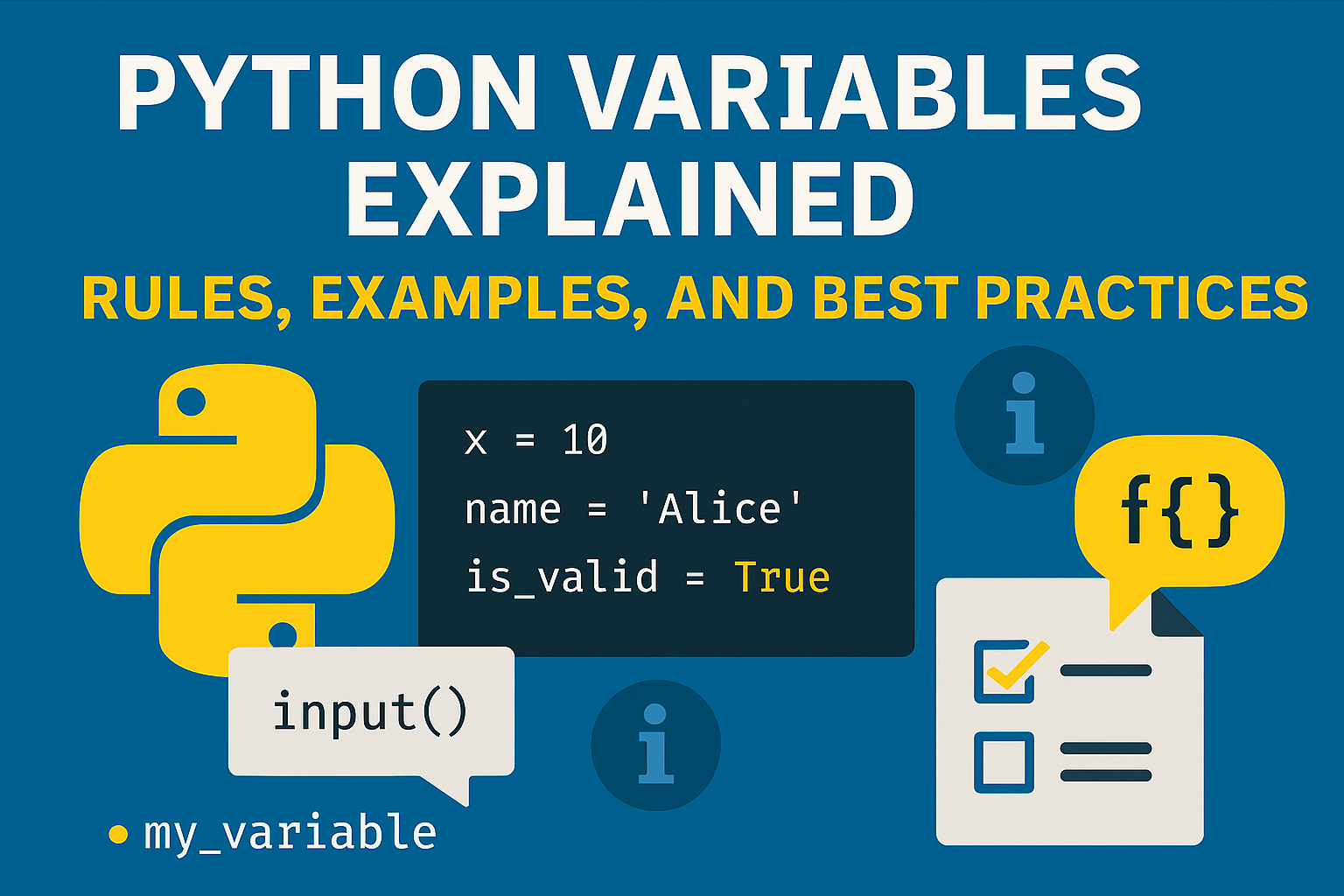
Python Variables Explained: Rules, Examples and Best Practices
Estimated reading time: 3.5 mins read Variables are the building blocks of every program. They allow you to store, update, and manipulate data, making your programs dynamic and interactive. What is a Variable? A variable is a name that refers to a value stored in memory. Think of it as a label for a container…