
Estimated reading time: 2.6 mins read
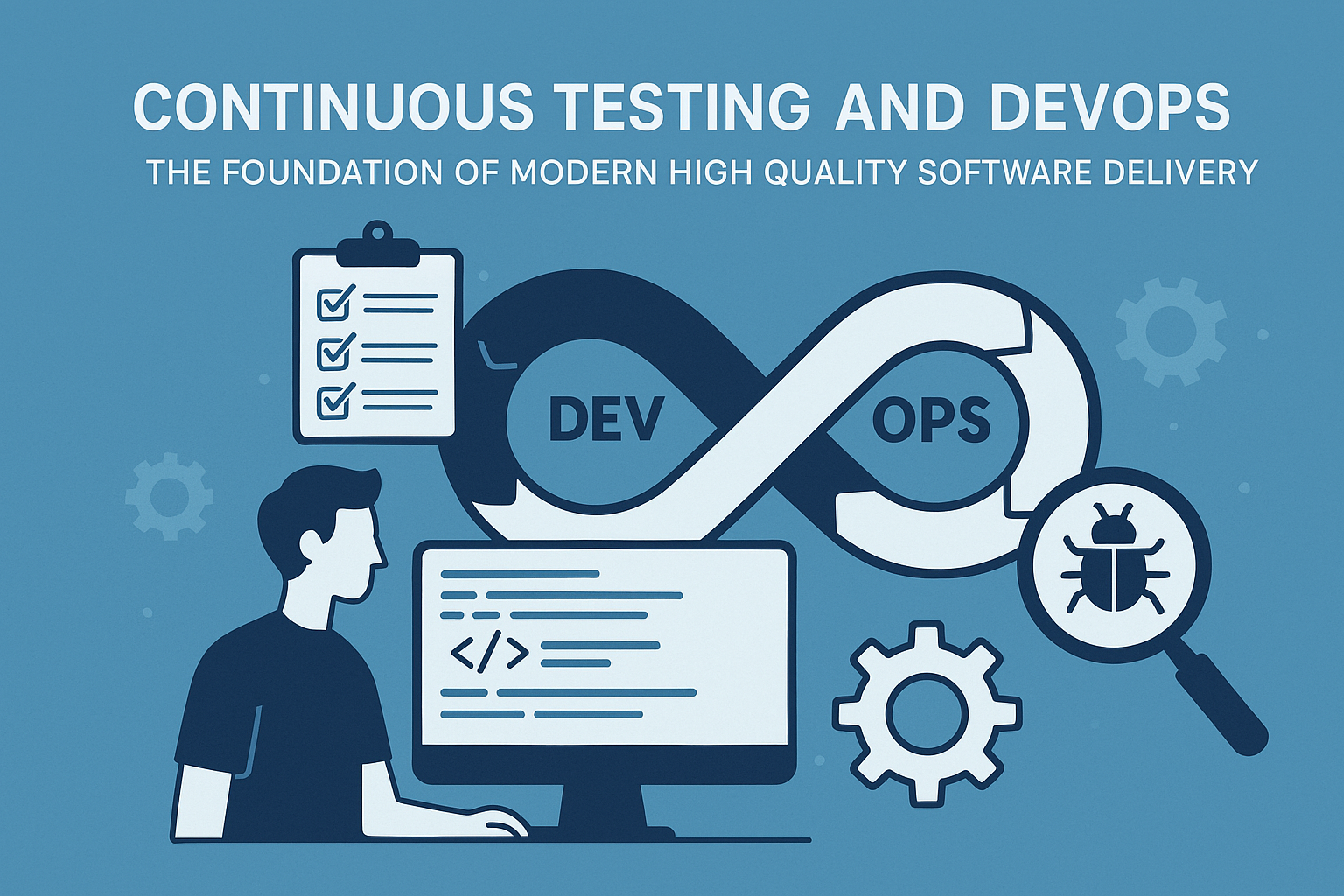
Modern software development demands speed, quality and reliability. Traditional testing approaches that check quality only at the end of the development cycle no longer meet these expectations. Today companies rely on Continuous Testing and DevOps supported by Continuous Integration (CI). These practices help teams deliver software faster, reduce risk and maintain consistent quality.
What Is Continuous Testing?
Continuous Testing is the process of running automated tests throughout the entire software development lifecycle. Instead of waiting until the end of development, tests run every time code changes. This approach ensures that issues are detected early and that the product remains stable with every update.
Continuous Testing improves quality, reduces manual testing effort and gives developers fast feedback. It helps teams maintain a reliable codebase and supports a strong QA strategy.
Key characteristics of Continuous Testing:
- Automated tests run frequently
- Bugs and defects are identified early
- Feedback loops are fast and consistent
- Quality checks integrate with the CI pipeline
Continuous Testing includes unit testing, API testing, UI automation testing, performance testing and security checks. These tests ensure each layer of the application remains stable as development continues.
What Is DevOps?
DevOps is a collaborative approach that brings development and operations teams together. It focuses on improving software delivery by combining automation, communication and continuous improvement. Instead of separate teams working in isolation, DevOps encourages shared ownership and faster problem solving.
The goal of DevOps is to deliver software more quickly and reliably while improving system stability and reducing deployment challenges.
DevOps focuses on:
- Collaboration between development and operations
- Automation of repetitive tasks
- Continuous delivery and deployment workflows
- Monitoring and fast feedback cycles
- Improving release speed and system reliability
DevOps is not simply a set of tools. It is a culture that values teamwork, efficiency and adaptability.
The Role of Continuous Integration (CI)
Continuous Integration (CI) is an essential part of both DevOps and Continuous Testing. In CI, developers merge code into a shared repository frequently. Each merge triggers automated builds and a complete set of tests.
CI ensures that the codebase remains stable and that integration issues are caught early. It supports fast development cycles and makes it easier to maintain consistent quality.
CI enables:
- Early detection of bugs
- Reduced merge conflicts
- Higher code quality
- Faster release cycles
- A stable environment for deployment pipelines
Without CI, it becomes difficult to maintain a reliable automation testing strategy or support a successful DevOps workflow.
How Continuous Testing and DevOps Work Together
Continuous Testing and DevOps work together to create a strong, predictable and scalable development process. DevOps provides automation, shared responsibility and efficient pipelines. Continuous Testing maintains quality across each stage of the CI pipeline.
Together these practices support:
- Faster and more stable releases
- Early risk detection
- Reliable software performance
- Strong collaboration across teams
- Continuous improvement across the lifecycle
Teams that adopt Continuous Testing within a DevOps environment experience fewer production issues, lower costs and higher release confidence.
Conclusion
Continuous Testing and DevOps are essential for modern software engineering. With Continuous Integration as the foundation, they help teams deliver high quality software quickly and consistently. Automation, continuous feedback and strong collaboration transform the entire development process.
Leave a Reply