
Estimated reading time: 3.3 mins read
Introduction
For anyone starting in software testing or QA, one of the first confusions is the difference between smoke testing, sanity testing, and regression testing. These testing types are critical in Agile, DevOps, and CI/CD environments and help ensure software is stable and reliable before release.
In this guide, I’ll explain:
- What each testing type is
- When and how to use them
- Real-world examples
- Key differences to avoid beginner mistakes
By the end, you’ll clearly understand how to use these testing strategies effectively in professional projects.
Why Smoke, Sanity, and Regression Testing Are Important
Frequent software releases and continuous integration demand a strong testing strategy. These tests help teams:
- Identify critical issues early
- Prevent broken builds from reaching production
- Save time by targeting testing efforts
- Maintain application stability after changes
Without these tests, teams risk production bugs, feature breakages, and loss of user trust.
Smoke Testing: Quick Build Validation
Definition
Smoke Testing is a high-level, shallow test of a new build to ensure that the critical functionalities work and the software is stable enough for further testing.
It acts as a build acceptance test.
When to Perform Smoke Testing
- After a new build deployment
- Before starting detailed testing
- After major code changes or releases
Scope and Focus
Smoke testing covers broad but shallow areas, such as:
- Application launch
- User login/logout
- Critical workflows
- Core API functionality
It does not cover edge cases or detailed validation.
Real-World Example
If a login page or home screen fails to load, smoke testing immediately flags this issue preventing wasted time on deeper tests.
Key Characteristics
- Broad coverage
- Shallow testing
- Fast execution
- Often automated in CI/CD pipelines
Sanity Testing: Focused Verification
Definition
Sanity Testing is a narrow, deep test performed after small changes, bug fixes, or feature enhancements to verify that the specific functionality works as intended.
It answers the question:
“Does this change work correctly without breaking anything else?”
When to Perform Sanity Testing
- After bug fixes
- After minor code changes
- When time is limited
Scope and Focus
Sanity testing focuses on:
- Recently fixed bugs
- Specific modules or features
- Impacted areas related to changes
Real-World Example
If a bug fix is applied to a password reset feature:
- Verify password reset works
- Ensure login functionality is not impacted
- Validate error messages
Key Characteristics
- Narrow scope, deep testing
- Mostly manual
- Fast and targeted
- Performed after smoke testing
Regression Testing: Ensuring Stability
Definition
Regression Testing ensures that existing features continue to work after new changes or bug fixes.
It protects the system from unexpected side effects.
When to Perform Regression Testing
- After new features are added
- After bug fixes
- Before major releases
- Regularly in CI/CD pipelines
Scope and Focus
Regression testing covers:
- Core business workflows
- User management
- Integrations
- Reports and data flows
Real-World Example
Adding a new checkout feature should not break:
- Login functionality
- Payment processing
- Order history accuracy
Key Characteristics
- Broad and deep coverage
- Time-consuming if manual
- Mostly automated
- Essential for product stability
Key Differences: Smoke vs Sanity vs Regression Testing
| Aspect | Smoke Testing | Sanity Testing | Regression Testing |
|---|---|---|---|
| Purpose | Check build stability | Verify specific changes | Ensure existing features still work |
| Scope | Broad | Narrow | Broad |
| Depth | Shallow | Deep | Deep |
| When | New build | After bug fix | After any change |
| Automation | Often automated | Mostly manual | Mostly automated |
| CI/CD Usage | Very common | Limited | Very common |
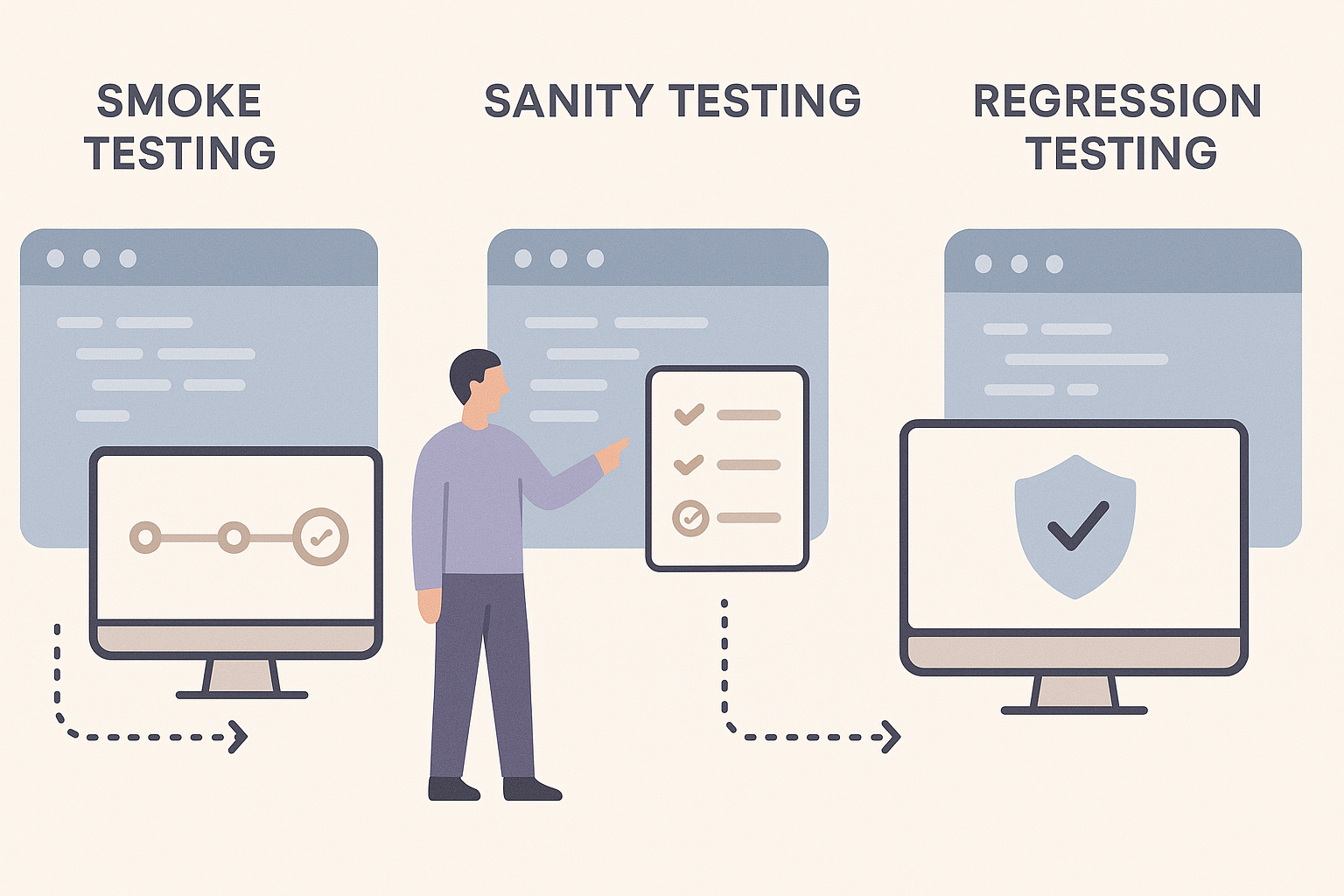
How Smoke, Sanity, and Regression Work Together
- Smoke Testing: Validates the build for further testing
- Sanity Testing: Checks minor changes or bug fixes
- Regression Testing: Ensures overall system stability
Tip for beginners: Skipping smoke or sanity testing often leads to wasted effort and unstable releases.
Common Mistakes to Avoid
- Treating smoke and sanity testing as the same
- Running regression tests before verifying build stability
- Over-automating sanity tests
- Running full regression for small fixes
By understanding each type, you save time and improve testing efficiency.
Happy Learning !
Leave a Reply